Beyond the Eye Chart: Addressing Eye Tracking Problems in Children
Many parents in Northwest Indiana find themselves in a frustrating cycle: their child is bright and hardworking, yet struggles significantly with reading fluency and classroom focus. Often, these families are told their child has “20/20 vision,” leaving them without answers. However, clear eyesight is only one piece of the puzzle. The real culprit is often eye tracking problems in children—a functional vision issue that standard eye exams frequently miss.
At Levin Eye Care Center, we believe that understanding the “why” behind these struggles is the first step toward a solution. As one local parent recently shared, the transformation that occurs when these barriers are removed is life-changing.
“We are incredibly grateful for the care and expertise our son has received… Since beginning therapy, the improvement has been remarkable—not just in his vision, but in every aspect of his learning. His reading fluency and comprehension have improved significantly, and tasks that once felt overwhelming are now manageable and even enjoyable for him.”
The Science of Eye Tracking: Why It Matters
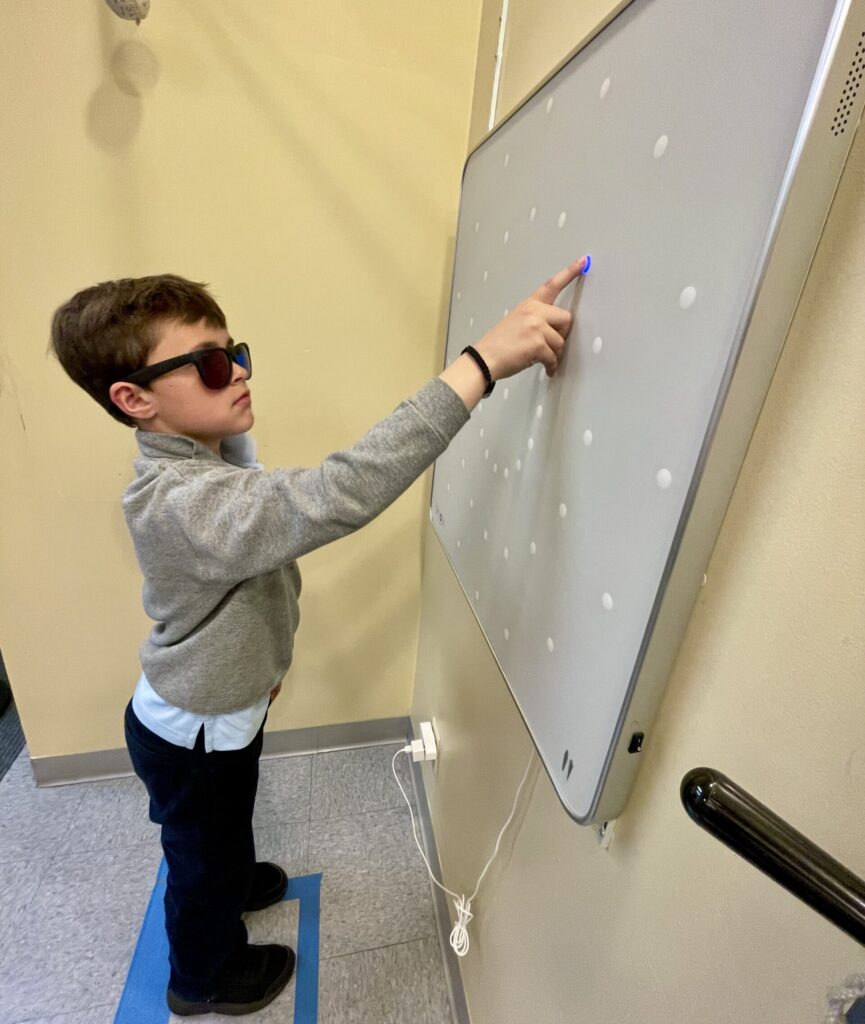
Eye tracking, known clinically as ocular motility, is the brain’s ability to move the eyes smoothly and accurately along a line of text. When a child’s tracking is inefficient, the eyes jump, skip, or “flutter” across the page. This is not a problem with the eyes’ muscles, but a coordination issue between the eyes and the brain.
When a child lacks smooth tracking skills, they experience:
- Physical Overload: The brain spends so much energy simply trying to find the next word that it has no bandwidth left for comprehension.
- Loss of Place: The child may skip lines or repeat words, leading to a fragmented understanding of the material.
- Academic Friction: As the parent noted, “tasks that once felt overwhelming are now manageable.” Vision therapy reduces the mechanical effort of reading so learning can become enjoyable again.
Impact Beyond the Classroom: Building Confidence
The most profound change we see at our Whiting office isn’t just higher test scores—it’s the restoration of a child’s self-esteem. When a student struggles with eye tracking, they often internalize the difficulty, believing they are not smart. Vision therapy reverses this narrative.
“What means the most to us, though, is the confidence he has gained. He approaches his work with a positive attitude and a belief in his abilities that simply wasn’t there before. It’s been amazing to watch him grow into a more capable, self-assured student.”
Personalized Vision Therapy in Northwest Indiana
Under the guidance of Dr. Steven Levin, our therapy programs are designed to meet the specific physiological and emotional needs of the student. We combine clinical skill with a supportive environment, ensuring that both the child and the parents feel empowered throughout the entire process.
Why Choose Levin Eye Care Center?
- Clinical Expertise: Specialized tracking and binocular vision retraining.
- Clear Communication: We ensure parents feel informed, involved, and supported throughout the entire process.
- Lasting Impact: Our goal is long-term academic success and overall confidence.
Take the Next Step Toward Your Child’s Success
Do not let eye tracking problems hold your child back another semester. Join the many Northwest Indiana families who have seen their children thrive through our individualized care.
The content on this blog is not intended to be a substitute for professional medical advice, diagnosis, or treatment. Always seek the advice of qualified health providers with questions you may have regarding medical conditions.